Baseball kit gloves are simply smaller, lighter versions of adult gloves – designed with little hands in mind. Most youth mitts use lightweight cowhide or synthetic materials so kids can open and close them easily. A properly fitting glove isn’t just about comfort; it builds confidence on the field. Giving a young player a glove that fits “just right” can pave the way for years of success and enjoyment.
Why Proper Fit Matters
Think of a glove like a pair of shoes: too tight and it hurts, too loose and it’s unsafe. A glove that’s snug (but not squeezing) gives kids control to catch and throw more confidently. If a mitt is too large or heavy, it can flop around and even snap back on the wrist, risking injury. Conversely, a glove that’s too small or tight can cramp fingers and hurt when a fastball hits. I always tell parents to aim for the Goldilocks fit – snug but not tight. In practice, that means kids should be able to wiggle their fingers slightly inside and easily open the glove, but it shouldn’t slide off.
Right Size for Kid Gloves
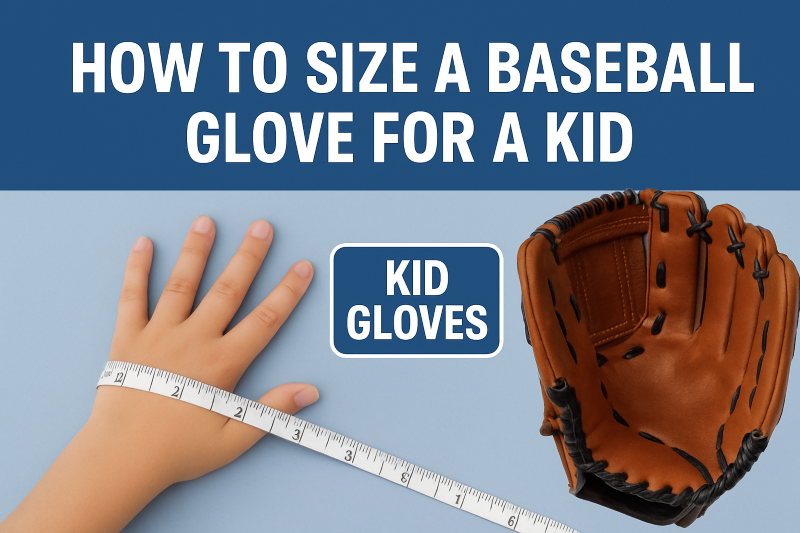
Getting the right size starts with good measurements. The industry standard is to measure from the tip of the index finger to the heel of the glove. In other words, if your child’s palm measures 11″ around, they likely need an 11″ glove. Here’s how to do it at home:
- Wrap a flexible tape measure around the center of the child’s palm (exclude the thumb). That circumference in inches roughly equals the glove length.
- Measure from the tip of the index finger straight down to the base of the palm (heel). This confirms what glove size is stamped on factory labels.
- Have your kid try on gloves in that size. It should slide on fully, with fingers reaching the end but not crammed.
Once you have the measurements, use age and position as a guide (see below). Also remember: youth gloves often have adjustable wrist straps or Velcro backs so you can fine-tune the fit as hands grow.
Size Guide by Age and Position
As a rule of thumb, younger players use smaller gloves and older kids use bigger gloves. For example, Bownet’s sizing chart shows: kids under 7 typically use ~29.5″–30″ catchers’ mitts or 8″–10.5″ field gloves, while 8–10 year-olds often need 30″–32″ catchers’ mitts and ~10.5″–12″ gloves. By age 11–13, many youth players move into 31″–32.5″ catchers’ mitts and 11″–12.75″ field gloves. Over 14 usually means 32″–34.5″ catchers’ mitts and 12″–13″ gloves.
Position also matters: infielders generally prefer shorter gloves for quick transfers, while outfielders use longer gloves for extra reach. For youth players, Wilson reports that infield gloves run about 10.75″–11.75″, whereas youth outfield gloves can be up to 12.5″. Pitcher’s gloves for kids are often around 10.5″–12″. Here’s a quick guideline:
- Ages 4–6 (Tee Ball): ~9″–10″ gloves (check 9.5″ or 10.5″ sizes)
- Ages 7–10 (Little League): ~10.5″–11.5″ gloves
- Ages 11–13 (Pre-Teens): ~11.5″–12.5″ gloves
- Ages 14+: ~12″–13″ gloves, depending on position.
These are starting points. Always try a range (11″ and 12″) if unsure, since kids grow quickly. Many coaches recommend erring on the slightly smaller side for beginners, because a smaller glove is easier to close.
Tips for a Snug, Comfortable Fit
Once you have a candidate, check the fit in person. I look for these signs: the glove should feel snug around the hand and wrist, with no gaping space. A quick test: have the player put on the glove and make a fist – their fingertips should reach near the pocket, and the glove should flex closed without struggling. Also ensure the back strap can tighten the wrist (many youth gloves have Velcro or laces).
Other fitting pointers:
- Finger Room: The longest finger (often the middle finger) should reach the end of the finger stall without force.
- Wrist Comfort: Too loose at the wrist means the glove will slide; too tight can cut off circulation. It should be snug enough to flip around when catching but not pinch.
- Break-In: New kid gloves often feel stiff. A little stiffness is OK (and helps break in quickly), but if the glove is rock-hard you can soften it with some leather conditioner or play catch with it.
- Growth Buffer: If your child is on the older end of an age bracket, you might size up one season. But avoid a glove so big they can’t grip it – a glove “half a size up” (like 11.5″ vs 11″) is usually safe for a year’s growth.
Remember that a glove too big hinders play and even risks a snap-back injury to the wrist, while a glove too small or tight can lead to hand injuries. A happy medium lets kids catch balls with confidence and comfort.
Kid Gloves Materials and Styles
Not all kid gloves are the same. Here are some popular options and features:
- Leather Kid Gloves: Made of soft cowhide (sometimes “pre-oiled” for easy break-in). Leather mitts (like Kid Gloves’ leather series) last longer and feel premium, but they need a bit of break-in time. They’re great for older kids who play multiple seasons.
- Synthetic/Waterproof Kid Gloves: These use engineered fabrics or treated leather to repel water. Waterproof kid gloves are handy for rainy practices. Synthetics often break in immediately and are lighter (good for beginners). Just note that non-leather gloves may wear out faster under heavy play.
- White Kid Gloves: Fun and stylish, white gloves (or gloves with white accents) are trendy on many teams. They make a bold statement, but keep in mind white leather can show dirt. If style matters, you’ll find kids’ models with white covers or colored linings.
- Little Kid Gloves (9″–10″): For the littlest catchers (ages 4–6), look for “Tee Ball” or “Yee Ball” gloves. These often have a closed basket-web for security and an even softer, flexible feel to help tiny hands.
When choosing, consider features like an adjustable wrist strap (so you can tighten as needed) and a fast break-in design for quick play. I usually recommend brands that offer padded palms and multiple color options. For example, Kid Gloves (placeholder for affiliate link) sells youth gloves in leather and synthetic materials, with sizes 9″ through 12″, including white and waterproof models. Their Kid Gloves synthetic line has easy break-in construction, while their leather series is budget-friendly and durable.
Our Top Picks
Here are a few stand-outs to look for (always insert your own affiliate link in place of the #):
- Kid Gloves 11″ Youth Leather Glove – A classic cowhide mitt with adjustable Velcro strap. Great for 9–12 year olds playing infield or outfield.
- Kid Gloves Waterproof Youth Glove – Synthetic leather construction that stands up to rain. Ideal for late-season games or humid climates.
- Kid Gloves 9.5″ Lil Rookie Glove – Super-soft glove for ages 4–6. Closed basket web makes it easy to trap balls.
- Kid Gloves White Ace 11″ Youth Glove – Stylish white-and-red glove, built with a break-in ready shell.
These are examples; be sure to match the size and material to your child’s needs. Many top coaches agree that a good youth glove is a great investment—kids learn better when they feel confident catching.
FAQ
How should a baseball glove fit a kid?
A: It should feel like a firm handshake – snug around the hand and wrist, but not painfully tight. Kids should easily open and close it. A gap equal to a penny or so between the glove and back of the hand is normal.
What does “kid gloves” mean?
In baseball it simply means gloves made for children’s hands. (As an idiom, “handle with kid gloves” means treat something very gently.)
How do I measure my child’s glove size?
Use a tape measure around the palm (excluding thumb) and from fingertip to base. Match those inches to the glove length (e.g. 10.5″ palm ≈ 10.5″ glove). Also consult a youth size chart. (Always double-check by trying it on!)